Mastering Dark Mode Interfaces with the Video Screen UI Elements Kit
In the rapidly evolving landscape of digital design, the visual presentation of multimedia content is no longer an afterthought; it is a cornerstone of user experience. As audiences increasingly consume video content on mobile devices and desktops alike, the interface surrounding that content—the player screen, the dashboard, and the control panels—must be intuitive, aesthetically pleasing, and functional. This is where a comprehensive Video Screen UI Elements Kit becomes an indispensable asset for creators, developers, and business owners. By leveraging a curated collection of isolated vector icons, bars, and dashboard templates, professionals can streamline their workflow and deliver superior digital products.
The Shift Toward Immersive Dark Theme Interfaces
The modern web and mobile application ecosystem has seen a decisive shift toward dark theme interfaces. This trend is not merely stylistic; it is rooted in usability and ergonomics. For video-centric applications, a dark background reduces eye strain, minimizes distractions, and allows the visual content to take center stage. When designing these environments, starting from scratch can be time-consuming and prone to inconsistency. A dedicated Video screen UI elements kit provides a foundational framework that adheres to these modern design standards.
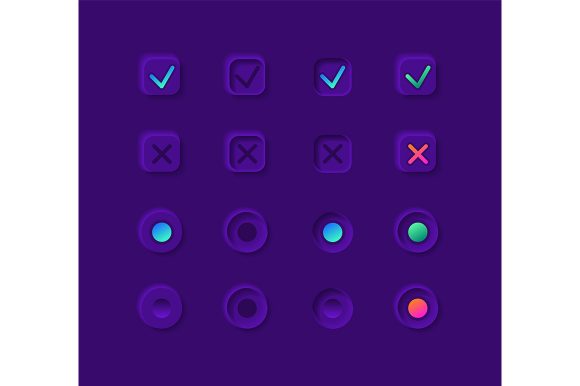
These kits typically feature a cohesive dark theme interface, ensuring that every button, slider, and icon shares the same visual language. This consistency is crucial for building trust with users. When a viewer interacts with a media player, they expect immediate recognition of controls. A well-designed kit ensures that the play button, volume slider, and progress bar are instantly identifiable, reducing the cognitive load on the user and allowing them to focus on the content itself.
Core Components of a Professional Player Screen
A robust UI kit is more than just a collection of random graphics; it is a systematic assembly of the essential components required to build a fully functional media player. Understanding what constitutes a high-quality Video Screen UI Elements Kit helps designers evaluate whether a specific resource meets their project needs.
- Isolated Vector Icons: The backbone of any interface, these icons represent actions such as play, pause, stop, rewind, fast-forward, full-screen toggle, and settings. In a professional kit, these are provided as isolated vector icons, meaning they can be scaled to any size without losing clarity. Formats like SVG and AI ensure crisp rendering on high-density mobile screens.
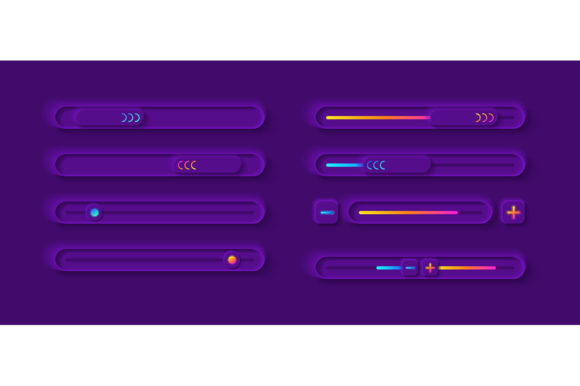
- Control Bars and Sliders: The progress bar is the most interactive element of a video player. A quality kit includes various styles of timeline sliders, volume controls, and buffering indicators. These elements often come with different states (hover, active, disabled) to facilitate dynamic interaction design.
- Dashboard Templates: Beyond the player itself, many projects require a backend or frontend dashboard to manage video libraries. A comprehensive kit includes bar and dashboard template layouts that help organize thumbnails, metadata, and analytics in a clean, readable format.
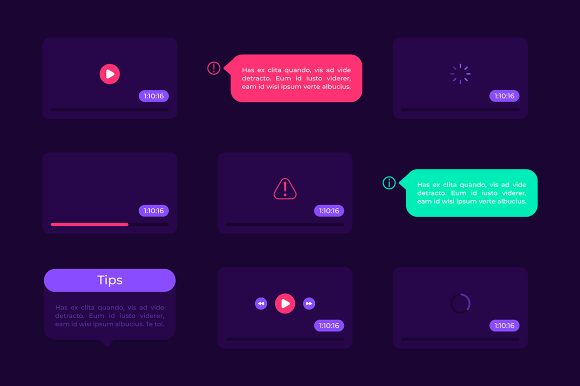
- Multimedia Panels: These are the containers that hold the video and its controls. They define the aspect ratios, border radii, and shadow effects that give the player its depth and character within the broader application design.
Versatility Across File Formats
One of the most practical aspects of a premium UI resource is its compatibility with various design tools. A standard Video Screen UI Elements Kit distributed as a ZIP file usually contains a wide array of formats, including EPS, JPG, PNG, SVG, and AI. This variety ensures that the kit is accessible to professionals regardless of their preferred software stack.
For vector-based workflows, the AI (Adobe Illustrator) and EPS files are paramount. They allow designers to deconstruct complex elements, modify anchor points, and recolor components to match specific brand guidelines. The SVG format is particularly valuable for web developers, as it can be embedded directly into HTML code, offering scalability and small file sizes that improve page load speeds.
Meanwhile, PNG and JPG files serve a different purpose. They are ideal for rapid prototyping, mockups, and presentations where a quick visual representation is needed without the overhead of vector editing. Having all these formats in a single package eliminates the need to convert files manually, preserving the integrity of the original design.
Real-World Applications and Use Cases
The utility of a Video screen UI elements kit extends far beyond simple website decoration. It serves as a critical tool for a diverse range of industries and project types.
- Streaming Services and OTT Platforms: Companies launching their own Netflix-style platforms require polished, reliable player interfaces. Using a pre-built kit accelerates the development of the front-end, ensuring that the user experience rivals major competitors.
- E-Learning and Educational Portals: Online course providers rely heavily on video content. A clear, distraction-free player interface helps students focus on the lesson material. Dashboard templates included in the kit can be used to organize course modules and track student progress.
- Corporate Training and Internal Communications: Businesses often host internal video libraries for training purposes. A professional UI kit allows IT and design teams to quickly deploy internal portals that look polished and function smoothly on both desktop and mobile devices.
- Mobile Application Development: For apps focused on social media, fitness, or news, integrating a video player is common. The mobile-specific widgets found in these kits ensure that touch targets are appropriately sized and that the interface adapts gracefully to smaller screens.
Evaluating Suitability for Your Project
While the benefits of using a Video Screen UI Elements Kit are clear, it is important to approach selection with a critical eye. Not every kit will be suitable for every project. Designers and business owners should consider several factors before integrating these assets into their workflow.
Customization Potential: Does the kit offer enough flexibility? While templates provide a head start, your brand may have unique color palettes or typography requirements. Ensure the vector files are well-organized with layered structures that make editing straightforward.
Accessibility Standards: A beautiful interface is useless if it is not accessible. When reviewing a kit, check the contrast ratios between the dark theme background and the UI elements. Ensure that icons are distinct and that interactive elements like buttons have sufficient size for users with motor impairments.
Technical Limitations: It is vital to remember that a UI kit provides the visual layer, not the functional logic. The Video Screen UI Elements Kit gives you the look and feel, but the actual playback functionality, streaming protocols, and responsive behavior must be coded by developers. Expectations should be managed accordingly; the kit is a design accelerator, not a turnkey software solution.
The Value of Consistency in User Experience
In the digital realm, consistency breeds confidence. When a user encounters a fragmented interface where icons differ in style or buttons behave unpredictably, their trust in the platform diminishes. By utilizing a unified Video screen UI elements kit, designers ensure that every element—from the smallest status icon to the largest multimedia panel—speaks the same visual language.
This consistency is particularly important in dark mode designs. Without a strict grid and color system, dark interfaces can easily become muddy or lose definition. A professional kit provides the necessary constraints and guidelines to maintain visual hierarchy, ensuring that the most important controls are always the most prominent.
Conclusion: Elevating Digital Content Delivery
The demand for high-quality video content continues to surge, and with it, the expectation for seamless viewing experiences. For general consumers, this means enjoying their favorite shows and tutorials without friction. For professionals and business owners, it means delivering a product that reflects quality and attention to detail.
A Video Screen UI Elements Kit bridges the gap between concept and execution. By providing a rich library of isolated vector icons, bars, dashboard templates, and multimedia panels, these kits empower creators to build sophisticated, dark theme interfaces efficiently. Whether you are developing a cutting-edge mobile application or refining a corporate video portal, the right UI resources can transform a standard player into an engaging, user-centric experience.
Ultimately, the goal of web design is to facilitate communication. When the interface fades into the background—supported by a well-crafted, intuitive design—the content shines. Investing in a comprehensive UI kit is an investment in clarity, usability, and the overall success of your digital presence. As you evaluate your next project, consider how these structured, versatile assets can streamline your design process and elevate the final product for your audience.