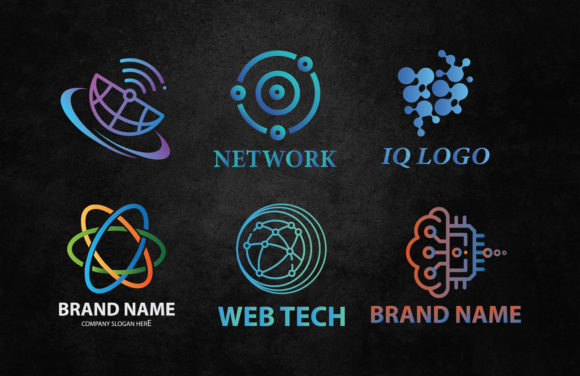
Integrating a Professional Logo Design Set for Business into Your Brand Workflow
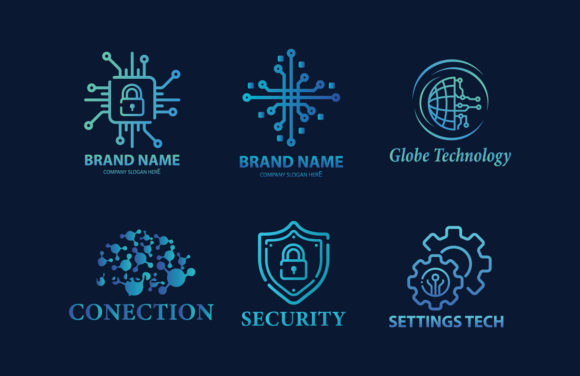
Establishing a visual identity is often the first critical step in launching a new venture or rebranding an existing one. For entrepreneurs, marketers, and freelancers, the pressure to produce high-quality assets quickly can be overwhelming. This is where a comprehensive Logo Design Set for Business becomes an invaluable resource. Unlike custom illustrations that require weeks of back-and-forth with a designer, a pre-designed set offers immediate access to professional-grade graphics. However, the true value lies not just in owning the files, but in understanding how to integrate them seamlessly into your broader operational workflow.
A logo design set typically includes a collection of vector-based icons and logotypes that are fully editable. When you acquire a set containing 100 editable and resizable vectors, you are essentially buying a toolkit rather than a single static image. These assets are designed to be modified, allowing you to align the visual output with your specific business specifications without starting from scratch. The key to success is treating these templates as a foundation upon which you build your unique brand narrative, ensuring consistency across all touchpoints.
Technical Foundations and File Compatibility
Before diving into the creative process, it is essential to understand the technical specifications of the assets you are working with. A professional Logo Design Set for Business should provide files in multiple formats to ensure compatibility with various software ecosystems. The inclusion of .ai (Adobe Illustrator) and .eps versions is critical for designers who need to manipulate anchor points, curves, and complex paths. These vector formats ensure that your logo remains crisp and clear regardless of the scale, from a tiny favicon to a massive billboard.
For stakeholders who may not have access to advanced design software, the availability of .pdf and .png files facilitates easier review and immediate use in digital presentations or web drafts. However, for final production, relying on the vector source files is non-negotiable. The fact that these designs are created in 300 DPI resolution and utilize the CMYK color model indicates they are print-ready. This distinction is vital for businesses planning physical collateral such as business cards, brochures, or packaging. Using RGB files intended for screens in a print environment often results in dull, inaccurate colors, whereas CMYK files are pre-calibrated for professional printing presses.
Strategic Integration into the Branding Process
Incorporating a logo design set into your workflow requires a structured approach. It fits naturally into the early stages of brand development, acting as a bridge between concept and execution. Rather than waiting for a custom design cycle, you can immediately begin testing how different logo variations look against your website mockups, social media headers, and product prototypes. This agility allows for faster iteration and decision-making.
Consider the workflow of a small business owner launching a product line. Instead of halting progress to commission a logo, they can select a base design from the set that resonates with their industry. Because the files are well organized, locating specific elements becomes a matter of minutes. The ability to modify all colors and text means you can instantly apply your brand's hex codes or Pantone matches. This customization ensures that while the structural design is shared, the final output feels exclusive to your brand.
Furthermore, these sets interact effectively with other tools in your stack. If you are using project management software to track your launch, the "design asset ready" milestone can be moved up significantly. Marketers can begin drafting campaigns with placeholder logos that are 90% final, reducing the friction between the creative and strategy teams. The editable nature of the vectors means that if your marketing director suggests a slight tweak to the icon's proportion during a meeting, a designer can implement that change on the fly without needing to redraw the entire concept.
Customization and Quality Control
The ease of customization is the defining feature of a high-quality design set. When you download a package where all colors and text can be modified, you gain the flexibility to adapt the asset to diverse contexts. For instance, a tech startup might prefer a sleek, monochromatic version of a logo for their app interface, while the same company might use a vibrant, full-color version for their trade show booth. Having access to the raw vector data allows for this level of granularity.
Quality control is another area where these sets excel. Since the designs are created at 300 DPI and are vector-based, you eliminate the risk of pixelation. This is a common pitfall when businesses try to upscale low-resolution images found online. With a resizable vector file, the mathematical paths define the shape, meaning the logo looks perfect at any size. This consistency is crucial for maintaining brand integrity. Whether your logo appears on a mobile screen or a building facade, the lines remain sharp and the proportions accurate.
To maintain quality during the editing process, always work on a copy of the original .ai or .eps file. Preserve the master file in case you need to revert changes or extract specific elements for future use. Organize your layers logically within the design software; name your color swatches according to your brand guidelines, and group related elements together. This discipline ensures that if you hand off the files to a third-party printer or another designer later, the project remains manageable and professional.
Long-Term Usability and Scalability
A significant advantage of investing in a comprehensive Logo Design Set for Business is long-term usability. As your business evolves, your branding needs may shift. You might expand into new markets that require a sub-brand or a simplified icon for social media avatars. Because you own 100 editable vectors, you have a reservoir of options to draw from. You can mix and match elements from different logos within the set to create derivative marks that still feel cohesive with your primary identity.
This scalability supports growth without incurring additional design costs. For educators and publishers creating course materials or books, having a library of professional icons allows for consistent visual communication throughout the content. Freelancers can use these sets to rapidly prototype ideas for clients, presenting polished concepts in a fraction of the time it would take to sketch from scratch. The efficiency gained here translates directly into cost savings and faster time-to-market.
Moreover, the print-ready format ensures that you are prepared for offline opportunities. If a chance arises to sponsor a local event or distribute flyers, you do not need to worry about file conversion or resolution issues. The CMYK files are ready to go, streamlining the interaction with print vendors. This readiness removes a common bottleneck in the execution phase of marketing projects.
Practical Tips for Implementation
To get the most out of your logo design set, adopt a systematic approach to implementation. Start by auditing your current brand needs. Identify where you need a primary logo, a secondary mark, and an icon. Select the best candidates from the 100 available vectors based on how well they communicate your core values. Once selected, proceed with the customization phase:
- Color Adaptation: Immediately replace the default CMYK values with your specific brand colors. Ensure there is sufficient contrast for accessibility standards.
- Typography Adjustment: If the set includes text, swap the placeholder font for your brand's typeface. Pay attention to kerning and leading to ensure readability.
- Variation Creation: Create horizontal, vertical, and icon-only versions of your chosen design. Save these as separate files to avoid confusion later.
- Format Export: Generate the necessary file types for your team. Keep the vectors for print and large formats, and export high-resolution PNGs with transparent backgrounds for digital use.
By following these steps, you transform a generic template into a tailored asset that serves your business objectives. The process emphasizes preparation and organization, two pillars of successful project management. It allows you to focus your energy on strategy and growth rather than getting bogged down in the minutiae of graphic creation.
In conclusion, a Logo Design Set for Business is more than just a collection of images; it is a strategic tool that accelerates your branding workflow. Its compatibility with industry-standard software, combined with the flexibility of editable vectors and print-ready specifications, makes it an ideal solution for professionals seeking efficiency without compromising quality. By integrating these assets thoughtfully into your planning and execution phases, you ensure a cohesive, professional, and scalable visual identity that grows alongside your business.