Musical Notes Clip Art: 100 Vibrant Colors
Finding the right visual element to complete a creative project often feels like searching for a needle in a haystack. You have the layout, the text, and the concept, but something is missing. That missing piece is often a simple graphic that ties the theme together without overpowering the design. This is where a comprehensive collection like Musical Notes Clip Art - 100 Colors becomes an invaluable resource. It is not just a folder of images; it is a toolkit designed to solve specific design problems for a wide range of users, from the casual hobbyist to the seasoned professional.
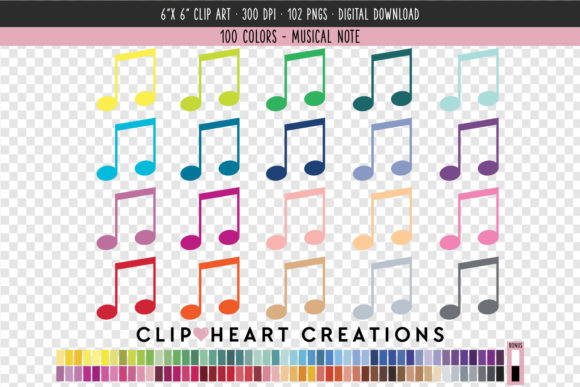
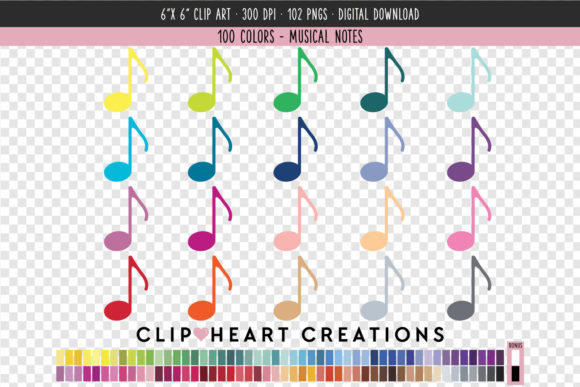
At its core, this collection offers 100 individual clip art elements, each rendered in a unique color. The technical specifications are built for quality and ease of use. Every file is saved in PNG format with a transparent background, ensuring that the notes sit cleanly on any surface, whether it is a digital website or a physical piece of cardstock. With a high resolution of 300 dpi and dimensions of 6 x 6 inches, these graphics maintain their crispness even when scaled up for large prints. All files are compressed into a single zip folder for convenient storage, and any watermarks seen in previews are removed upon purchase, leaving you with clean, ready-to-use assets.
Why Color Variety Matters in Design
You might wonder why a designer would need one hundred different colors of the same musical note. The answer lies in flexibility and brand consistency. For a small business owner creating marketing materials, matching the exact shade of their logo is crucial. If your brand uses a specific teal or a warm coral, finding a stock image in that exact hue can be time-consuming. Having a spectrum of 100 colors means you are likely to find a match immediately, or at least a shade close enough to work without needing complex editing software.
For educators and teachers, color serves a functional purpose beyond aesthetics. When creating worksheets, reward charts, or classroom decorations, color coding is a powerful teaching tool. A music teacher might use red notes for quarter notes and blue notes for half notes to help students visually distinguish rhythm patterns. In this context, the sheer volume of color options allows for the creation of diverse, engaging learning materials that cater to different learning styles without requiring the teacher to be a graphic designer.
Tailored Uses for Different Creators
The value of this collection shifts depending on who is holding the mouse or the scissors. Here is how different groups might evaluate and utilize these assets:
- Scrapbookers and Card Makers: For these creators, texture and print quality are paramount. Because these files are 300 dpi, they print sharply on home printers. A scrapbooker documenting a concert memory can layer these notes over photos without worrying about pixelation. The transparent background is essential here, allowing the notes to overlap images naturally rather than sitting inside a white box.
- Event Planners and Hosts: Whether organizing a recital, a birthday party with a music theme, or a wedding, cohesion is key. These graphics are perfect for cupcake toppers, gift tags, and invitations. A host can print a sheet of varied colored notes, punch them out, and attach them to favors, creating a custom look that feels expensive but costs very little.
- Web Designers and Bloggers: Speed and file size matter in the digital realm. PNGs with transparency load quickly and integrate seamlessly into CSS backgrounds or blog post headers. A music blogger reviewing albums can use these icons to break up text or highlight ratings, maintaining a professional look without commissioning custom illustrations.
- Product Designers: Those creating physical goods, such as fabric prints or sticker sheets, need high-resolution vectors or rasters. The 6 x 6 inch size provides enough detail for small-scale manufacturing proofs or print-on-demand services.
Evaluating Quality and Usability
When deciding if a digital asset fits your needs, several factors come into play. For a beginner, the primary concern is often ease of use. The fact that these files come pre-separated in a zip folder and require no background removal saves hours of frustration. There is no need to learn complex masking techniques in photo editing software; you simply drag, drop, and resize.
Conversely, a professional graphic designer will look at resolution and flexibility. The 300 dpi standard ensures that the artwork holds up under professional printing conditions. Furthermore, having 100 distinct variations means the designer can create a gradient effect or a rainbow motif without having to manually recolor a single black-and-white image, which can sometimes result in muddy or inconsistent tones depending on the software used.
Cost-effectiveness is another universal priority. Purchasing a bundle of 100 high-quality images is generally more economical than buying individual clips or subscribing to a monthly stock service that might not have the specific variety needed. For freelancers working on tight budgets, owning these files outright means they can be reused across multiple client projects without worrying about licensing expiration dates, provided the license allows for commercial use.
Practical Applications in Everyday Projects
To visualize how this collection fits into real-world scenarios, consider these examples:
- The DIY Gift Wrapper: You have a plain brown paper gift for a musician friend. By printing a few of these colorful notes on adhesive paper or gluing them on, you instantly transform a generic package into a thoughtful, themed present.
- The Online Course Creator: You are building a module on music theory. You need icons to represent different notes in your video thumbnails and PDF handouts. Using a consistent set of colorful notes helps brand your course and makes the content visually appealing to students.
- The Small Bakery Owner: Your shop is hosting a "Music and Muffins" morning. You need quick signage and labels. Printing the clip art on sticker paper allows you to label jars of cookies or decorate the menu board with minimal effort and maximum visual impact.
Making the Right Choice for Your Goals
Ultimately, determining whether Musical Notes Clip Art - 100 Colors is right for you depends on your current project requirements and future goals. If you frequently work on projects involving music, education, celebrations, or general design, having a versatile library of high-resolution graphics is a strategic investment. It reduces the time spent searching for assets and increases the speed of your workflow.
For those who prioritize creativity, the variety offers a playground for experimentation. You can mix and match colors to create moods—cool blues for a calm lullaby theme or bright yellows and oranges for an energetic jazz festival flyer. For the pragmatic user, the reliability of the file format and the clarity of the resolution offer peace of mind that the final product will look professional.
In a world where visual content drives engagement, having the right tools at your disposal makes all the difference. Whether you are crafting a heartfelt card, designing a corporate presentation, or decorating a classroom, this collection provides the building blocks you need to bring your musical ideas to life with color and precision.